Queer Places:
Hôtel de Levis-Mirepoix (or Hôtel de Nevers), 1 Quai de Bourbon, 75004 Paris, France
Schloss Lustheim, lustheim 1, 85764 Oberschleißheim-Lustheim, Germany
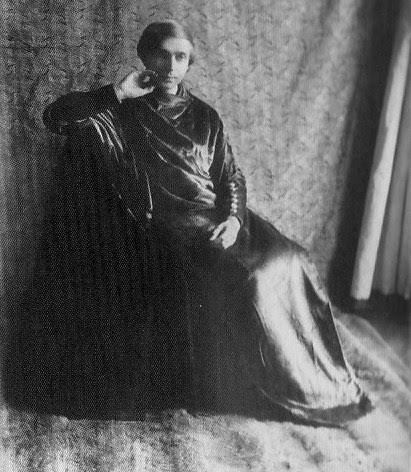 André Germain (August 12, 1882 – September 15, 1971) was a French writer, essayist, poet, and prominent literary figure whose life and work were deeply
interconnected with the early 20th-century European avant-garde and subcultural queer networks. He is best known for his role as Pierre Larue in
Klaus Mann's novel Mephisto. Mann also portrayed him as Maurice Larue in Mann's novel Rendezvous at Infinity.
Born into exceptional wealth as the son of Henri Germain, the founder of the major French bank Crédit Lyonnais, André was raised with immense
financial freedom. This privilege allowed him to reject traditional banking or corporate paths to fully immerse himself in the Parisian literary salon
scene, becoming an influential patron, author, and chronicler of his contemporaries.
In his youth, Germain married Edmée Daudet (1886–1937), a daughter of Alphonse Daudet. The marriage, which was said to be "horrible,"
was annulled after fourteen months on January 16, 1908.
Throughout the Belle Époque and the Interwar period, Germain established himself as a versatile man of letters, publishing numerous volumes of poetry,
literary criticism, biographical studies, and reflective memoirs. He founded and financed influential literary reviews, most notably Écrits Nouveaux,
which provided a platform for emerging post-World War I talent. His wealth and passion for the arts made him a fixture in the aristocratic and artistic
salons of Paris, where he moved comfortably among figures such as Marcel Proust,
Jean Cocteau, Robert de Montesquiou, and
Anna de Noailles. His intimate memoirs, written later in life, serve as crucial eyewitness records of the
social dynamics, artistic rivalries, and hidden lifestyle networks of Paris's cultural elite across several decades.
Germain’s life and writings are particularly significant within LGBTQ history. As an openly gay man living in a period when homosexuality carried
profound social stigma—even within sophisticated high-society circles—he navigated his identity through a mixture of aesthetic expression and strategic
social positioning. He maintained close friendships and romantic associations within a tight-knit network of queer writers, artists, and aristocrats.
Germain was deeply fascinated by the concept of aestheticism and the decadent movement, both of which often served as covert frameworks for expressing
homosexual desire and identity at the turn of the century. His connection to figures like Count Robert de Montesquiou, a famed dandy who inspired
Proust’s Baron de Charlus, placed Germain directly at the heart of the contemporary queer cultural landscape.
In addition to his personal relationships, Germain directly addressed homosexual themes and subtexts in his literary works and historical studies. He
frequently wrote about figures whose lives intersected with queer history, including studies on
Ludwig II of Bavaria and various romantic poets. In his autobiographical and observational writings,
such as Les Clés de Proust and La Bourgeoisie qui brûle, Germain offered candid, sharp, and often gossipy insights into the homosexual subculture of
early-to-mid 20th-century Paris. While his commentary was sometimes critique-heavy or colored by personal spites, his work remains a vital primary
resource for understanding how gay intellectuals and aristocrats articulated their identities, formed social networks, and sought literary
self-expression during a pivotal era of modernization.
Germain had a romantic relationship with the German artist and illustrator Alastair (Hans Henning von Voigt) during
the 1920s. Germain’s significant wealth allowed them to live luxuriously in Schloss Lustheim in Bavaria during Germany's post-WWI hyperinflation. Germain
moved in the same elite social circles as Proust and maintained an acquaintance with him. He later wrote extensively about Proust and his entourage in his
memoir Les Clés de Proust. Robert de Montesquiou was a prominent figure in the Parisian belle époque and aesthetic movement who served as a key friend,
mentor, and social contact for Germain. Germain interacted frequently with Jean Cocteau within the Parisian avant-garde and salon networks. Germain was a close
friend and biographer of the Italian poet and playwright Gabriele d'Annunzio. Germain frequented the
famous literary salons hosted by Natalie Clifford Barney and associated closely with other prominent
queer writers of the period, including René Crevel.
References:
- Germain, André. Les Clés de Proust; suivi de Portraits. Paris: Éditions Sun, 1953.
- Germain, André. La Bourgeoisie qui brûle. Paris: Éditions Sun, 1951.
- Germain, André. Sous le signe du taureau. Paris: Éditions de la Nouvelle Revue Critique, 1931.
- Germain, André. De Proust à Dada. Paris: Éditions du Sagittaire, 1924.
- Bibliothèque Nationale de France (BnF) – Catalogue Général - Person Authority Record: `cb13321429k` (André Germain, 1882–1971).
- Archives de Paris & Civil Registry of Montvicq (Allier) - Official birth and death certificates establishing his birth date (August 12, 1882, in Montvicq) and death date (September 15, 1971, in Paris), along with lineage documentation connecting him to Henri Germain, founder of Crédit Lyonnais.
- Dictionnaire de biographie française (DBF)
- Painter, George D. Marcel Proust: A Biography. New York: Random House, 1959.
- Spangenberg, Eberhard. Karriere eines Romans: Mephisto, Klaus Mann und Gustaf Gründgens. Reinbek: Rowohlt, 1986.
- Hakl, Hans Thomas. Der verborgene Geist von Eranos: Unbekannte Begegnungen wissenschaftlicher Dichter und Künstler. Bretten: Scientia Nova, 2001.
Support this project
This website is a passion project researched, developed, and funded entirely by me. If you find the content valuable and would like to help support the ongoing research and hosting costs, any contribution is deeply appreciated.
Thank you for keeping this independent resource alive!
My books on Amazon: Elisa Rolle's books
BACK TO HOME PAGE